Training
What to expect from a personal security class
Thinking about your first personal security class? What the sessions look like, how physical it gets, what to wear and how to get the most from it.
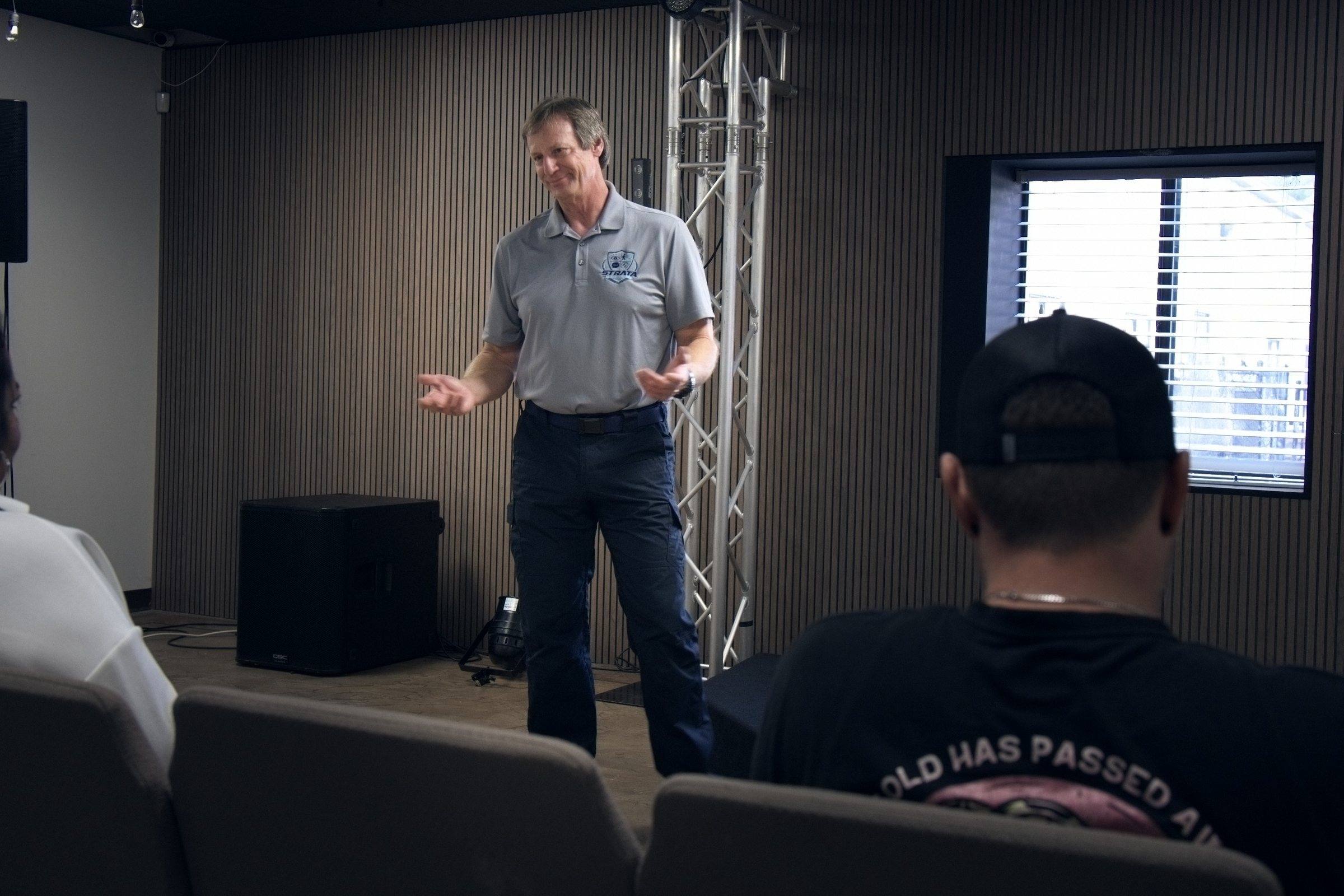
Signing up for a first personal security class can feel like a bigger step than it is. Many adults have never done anything like it, and it is natural to wonder whether it will be intense, physical or uncomfortable. Here is what a Strata class actually looks like.
Who is in the room
Ordinary adults. People come for many reasons: a new job with late hours, more travel, a recent experience that rattled them, a role at church, or simply a sense that they would like to be better prepared. No experience in martial arts, law enforcement or fitness is expected.
How the time is spent
SDS Level 1 is taught either as three two-hour sessions or in a single 6.5-hour day. Each session mixes four ways of learning:
- Lecture, where the instructor explains a concept and why it matters.
- Discussion, where students ask questions and work through real situations.
- Demonstration, where the instructor shows what a skill or position looks like.
- Physical practice, where students try it themselves.
Level 1 covers situational awareness, avoidance strategies, effective communication and physical response. Topics include the criminal mind, personal protection and the law, how to train the mind, and physical and mental preparation, with realistic encounters throughout.
How physical it gets
Level 1 covers every layer, from awareness and avoidance through communication to physical-response techniques, and participants experience realistic encounters as they learn. Class sizes are intentionally kept small. The registration form asks about any relevant physical limitations so the instructor knows in advance.
SDS Level 2, which requires Level 1, spends much more of its time on practical physical response: movement, blocking, striking, counters, escapes, grabs and ground encounters.
What to bring
- Comfortable clothes you can move in.
- Questions about the places and routines in your own life.
How to get the most from it
Ask questions, especially about the situations you actually face. The most useful parts of a class are often the conversations about specific places and routines: a commute, a parking deck, a workplace entrance. Then practice a few of the habits in the weeks afterward. Six hours gives you the foundation; the habits last when you keep using them.