



Register
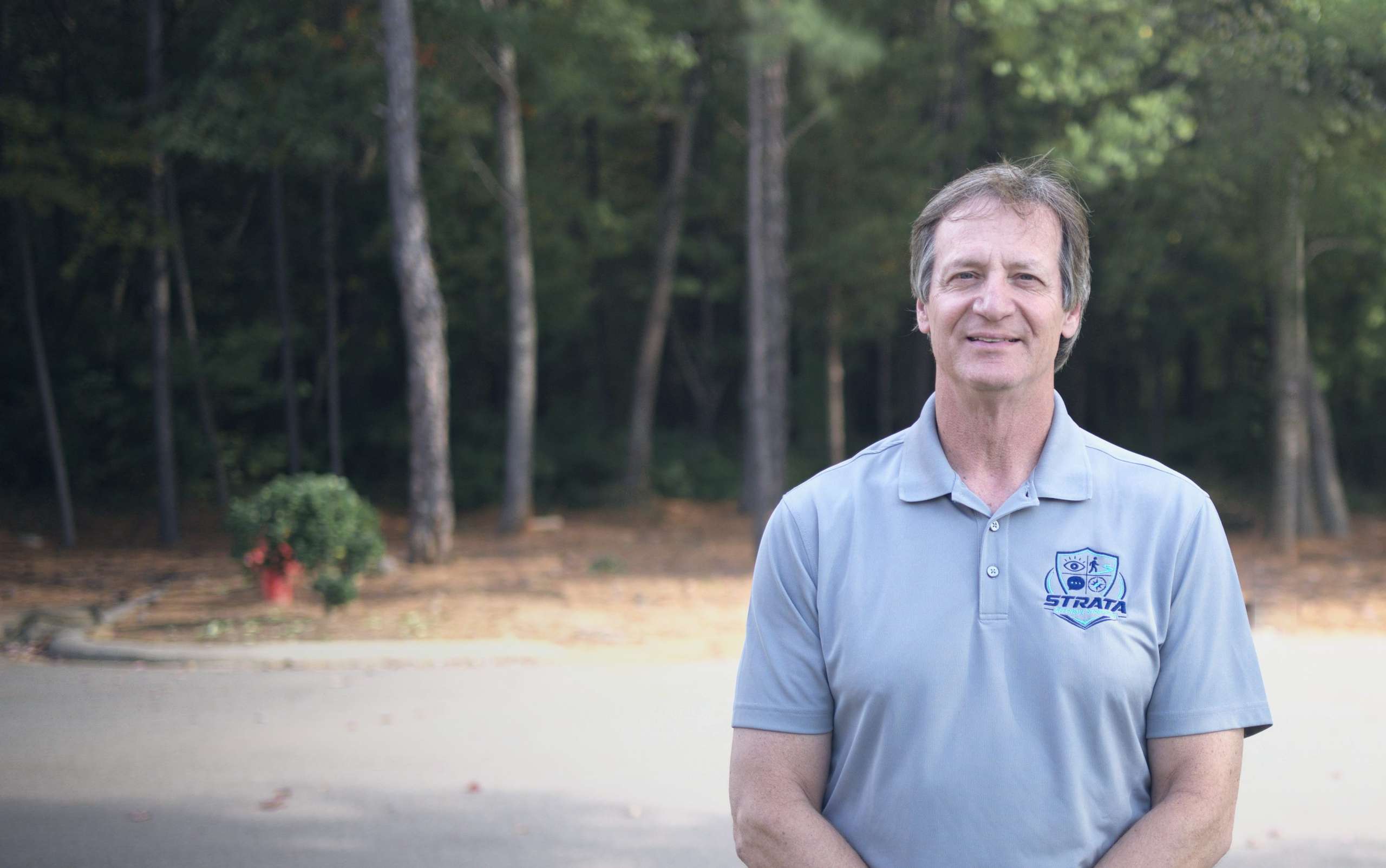
Vince Doxbeck, founder of Strata Defensive Strategies, smiling outdoors in a Strata polo

Learn to see trouble early and avoid it.

Practical classes in situational awareness, avoidance, communication and physical response, for adults and teens 16 and older in North Carolina, taught personally by Vince Doxbeck, a 25-year law enforcement veteran.

  1. Awareness
  2. Avoidance
  3. Communication
  4. Physical response
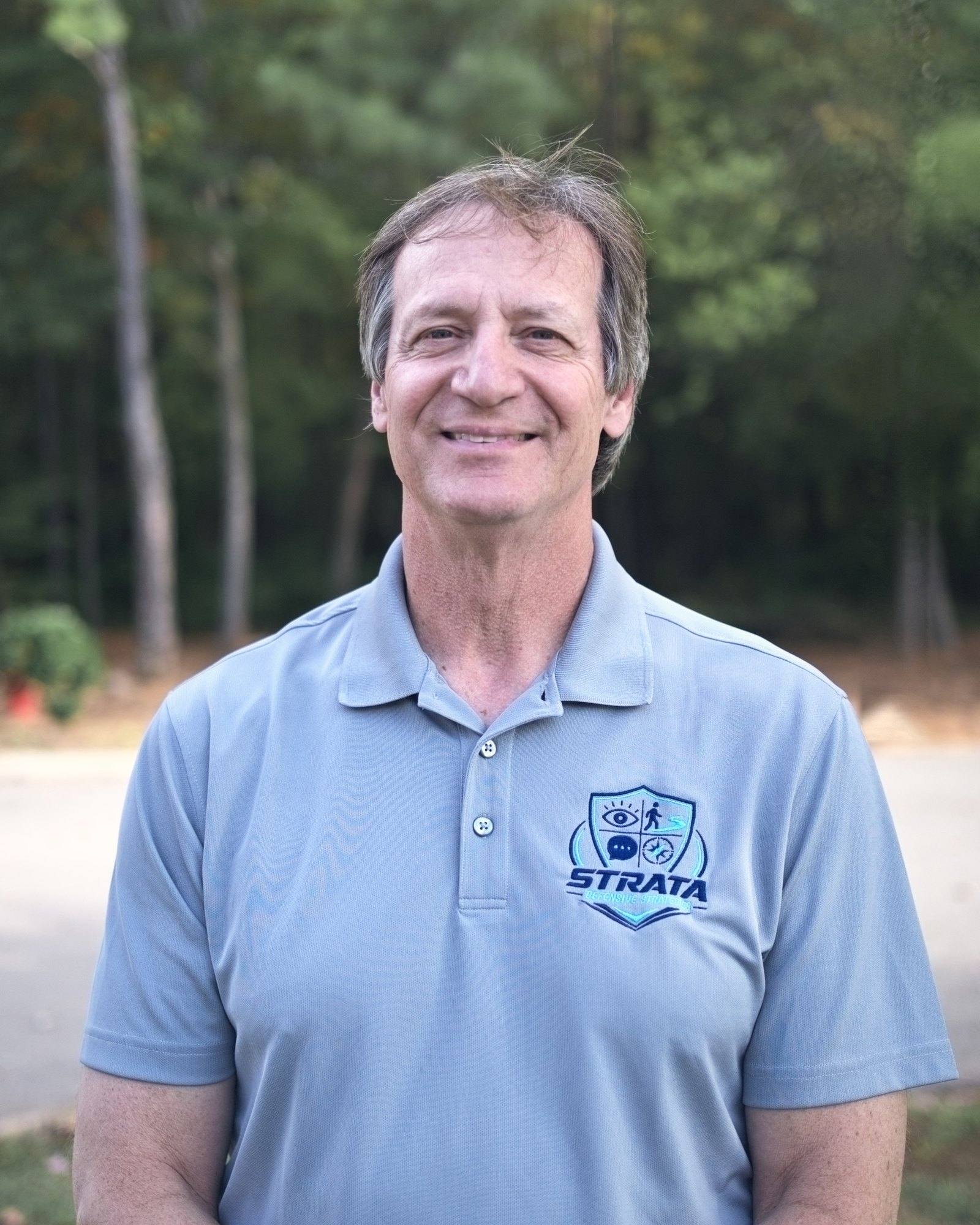
Portrait of Vince Doxbeck, founder and lead instructor of Strata Defensive Strategies, smiling outdoors in a Strata polo

Your instructor

Vince Doxbeck

“This entire concept comes from a deep desire to keep people from becoming victims.”

“My experiences and my love for others are what drive me to teach this program.”

“In my more than 30 years of law enforcement and security experience, my biggest frustration was responding to crime after the fact. So I decided to create a program that teaches and guides citizens in the local community how to develop simple and effective layers of security that they can integrate into their daily routines, which allows them to take responsibility for their own personal protection and safety.”

Every SDS class is taught by Vince himself, in small groups, so he gets to know each student and the places they actually spend their days.

  • 25years in law enforcement, including as a Senior Officer with the City of Raleigh Police Department
  • 40+years of martial arts training and teaching, as a Black Belt Certified Martial Arts Instructor
  • 17years teaching as a certified DARE instructor

Read Vince’s story Call Vince at (919) 389-7815

Personal protection is more than learning how to fight.

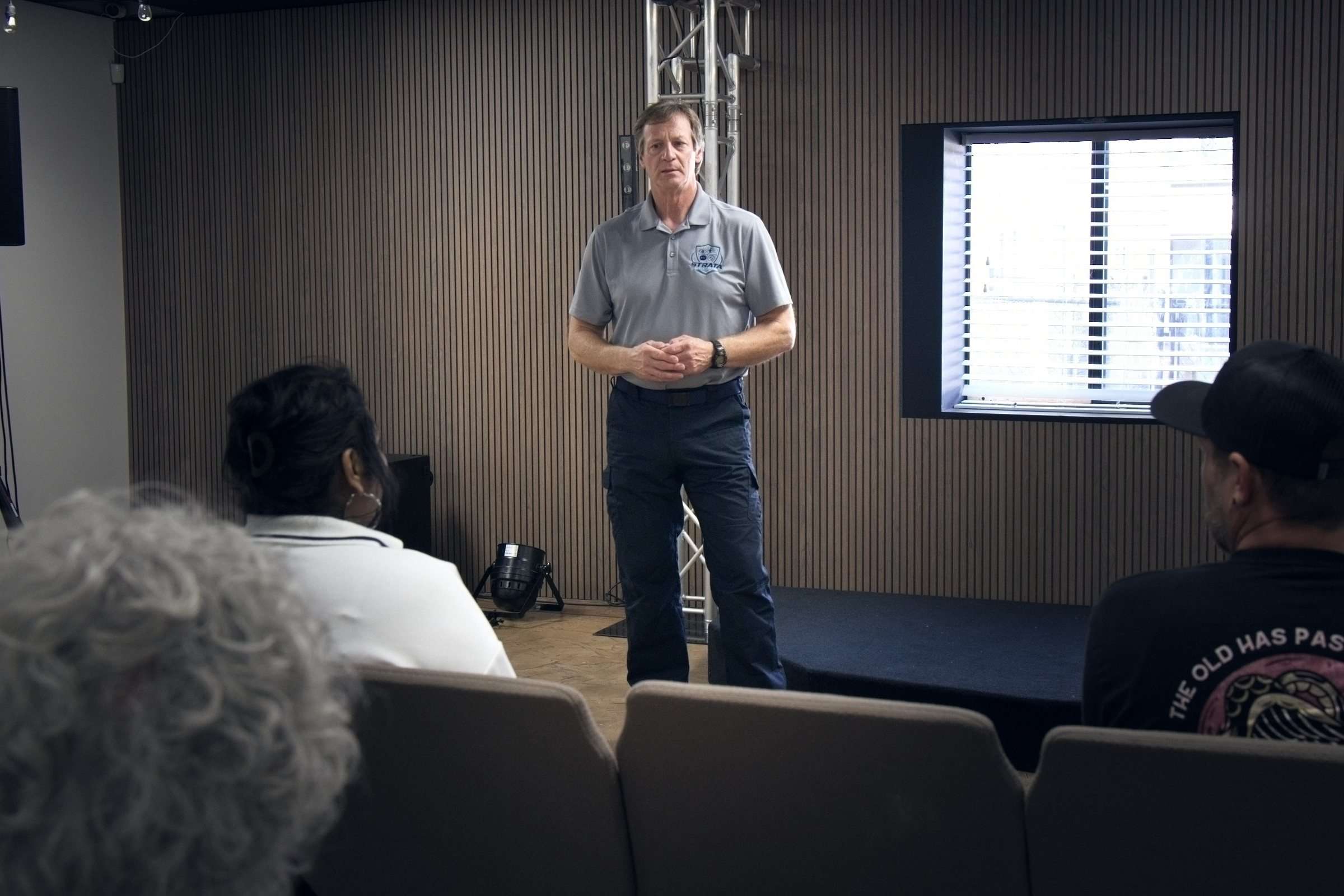
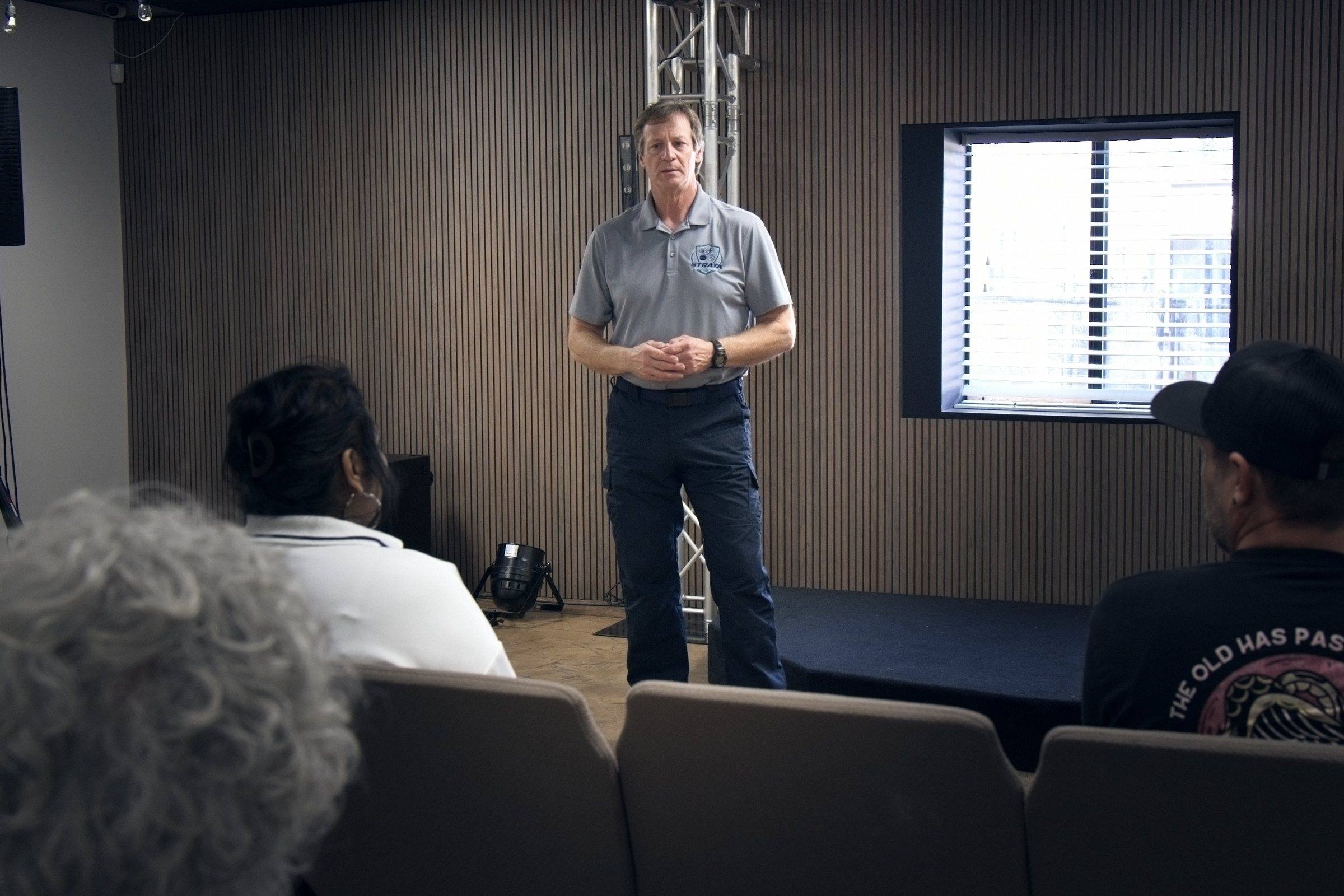
Vince Doxbeck standing at the front of the Strata classroom, talking with adult students seated in the foreground

Most self-defense classes start with the physical. Strata starts much earlier.

It starts with the decisions that keep a situation from getting that far. In Strata classes, students learn to:

  1. Recognize potential problems earlier
  2. Make safer decisions
  3. Avoid unnecessary confrontation
  4. Communicate under pressure
  5. Physically respond when necessary

Security is built in layers.

Each one gives you more options than the next. Classes follow the order things tend to happen in real life: notice first, then avoid, then talk, then move.

  1. A quiet downtown Raleigh street on an overcast day, lined with office buildings, trees and parked cars

    Awareness

    Recognize what is happening around you before it becomes a problem.

    Noticing people, places and behavior early gives you time to decide what to do next.

  2. A set of keys left hanging in a door lock, with a hand reaching toward it out of focus

    Avoidance

    Identify options, create distance, and make choices that reduce unnecessary risk.

    Choosing a different route, a different parking space or a different time to leave is often the simplest way to stay safe.

  3. Two men shaking hands and smiling outside an office building

    Communication

    Develop confident communication for establishing boundaries, maintaining control and helping de-escalate difficult situations.

    Clear words, a steady voice and a deliberate posture can de-escalate a situation and help you keep control. Students practice this in realistic encounters.

  4. Physical response

    Walk or run away, move to a more strategic location, and use body language to control the situation, with practical techniques for when that is not enough.

    Physical response is not just fighting. In Strata classes it includes how you move, where you position yourself and how you carry yourself, as well as practical techniques: Level 1 introduces them, and Level 2 builds on them with movement, blocking and striking, then counters to strikes, grabs and ground attacks.

A woman walking down a corridor, unaware of a person holding a handgun behind her

Most dangerous situations don’t begin with a punch.

They usually begin in ordinary places, with small signals that are easy to miss. Personal security starts well before anything turns physical.

  1. Recognizing behavior
  2. Noticing surroundings
  3. Positioning
  4. Decision making
  5. Establishing boundaries
  6. Creating distance
  7. Communication
  8. Knowing when to leave
  9. Preparation
  10. Physical techniques

By the time a situation becomes physical, many of the useful decisions have already been made or missed. That is why Strata teaches the early layers first.

Two courses, taken in order.

Level 1 is the core course: situational awareness, avoidance and communication, with an introduction to physical response. Level 2 is for graduates who want to take physical techniques further. Both are for adults and teens 16 and older.

Why six hours

“I know from my 40-plus years in the martial arts and my training in law enforcement tactics that it takes real time to teach people correct techniques and concepts. That's why SDS Level 1 is taught either as three two-hour sessions or in one 6.5-hour day. Even that is not close to what it really takes, but I know I can give people a good start with it. Anything less and they are just wasting their time and investment, and I can't do that.”

Vince Doxbeck, founding instructor

Level 01

SDS Level 1
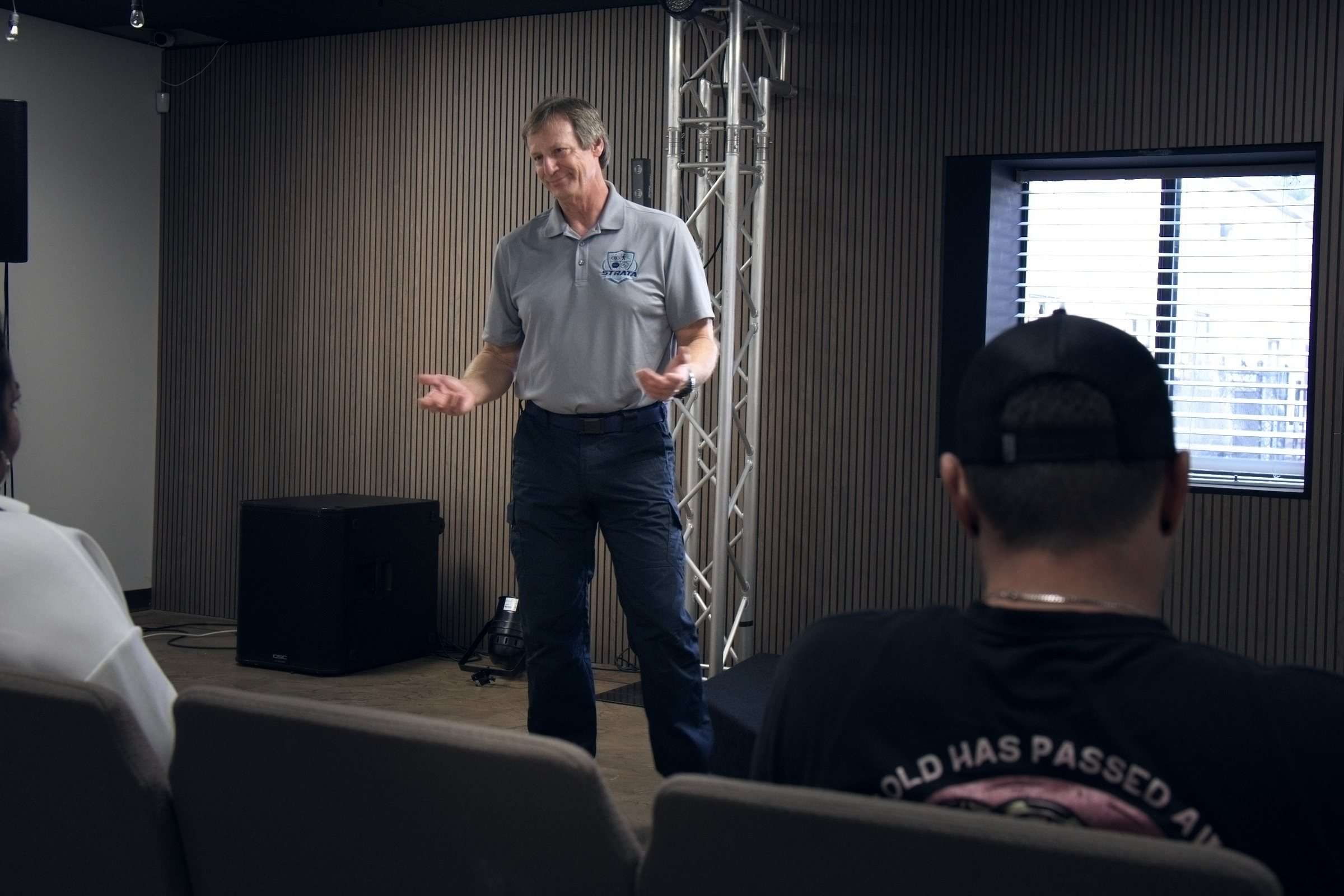
Vince Doxbeck gesturing as he talks a Level 1 class through a point, with students listening in the foreground

Foundation course

6 hours3 × 2-hour sessions or one 6.5-hour day$125

Six hours of foundational personal security training: awareness, avoidance, communication, preparation and an introduction to physical response.

  • Situational awareness
  • Avoidance strategies
  • Effective communication
  • The criminal mind
  • How to train the mind
  • Mental and physical preparation
  • Personal protection and the law
  • Introductory physical-response techniques
  • Realistic encounters and scenarios

Level 02

SDS Level 2

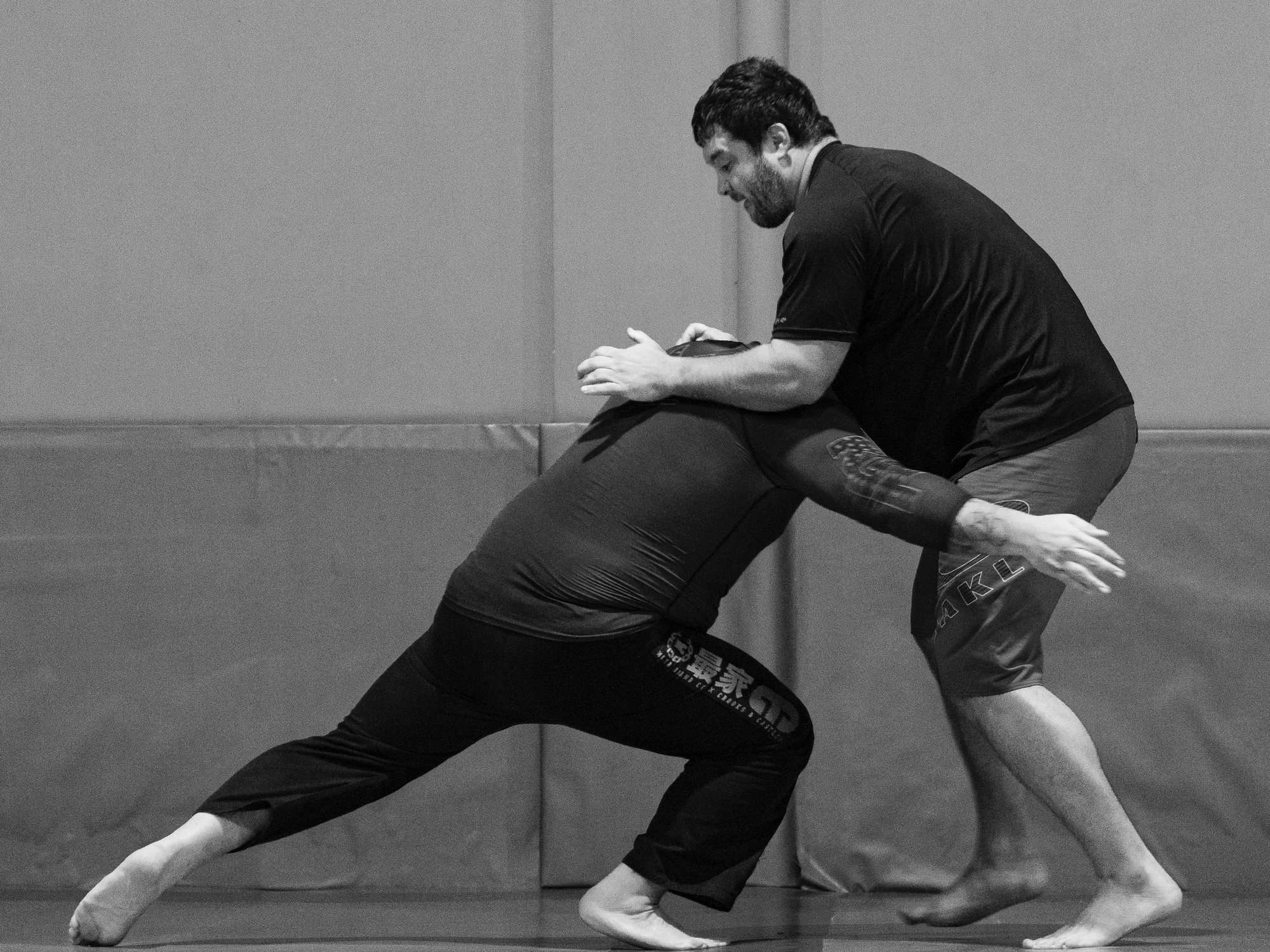
Two men practicing on training mats, one driving low into the other, who controls his head and shoulders

For Level 1 graduates

6 hours3 × 2-hour sessions$125

Six hours of practical self-defense for Level 1 graduates: movement, blocking and striking, then counters to strikes, grabs and ground attacks.

Requires SDS Level 1

  • Review of movement, blocking and striking
  • Effective counters to strikes
  • Counters and escapes from grabs
  • Ground counters and escapes

SDS On the RoadPublic classes are held at the Angier Chamber of Commerce. Strata will also bring SDS to your church, studio, business or group. Call for details.Call (919) 389-7815

Students walking out of the training building together after class

You don’t get to choose when you’ll need the skills. You can choose whether you’re prepared.

View upcoming classes